
The Storyteller Paradigm to be published in May
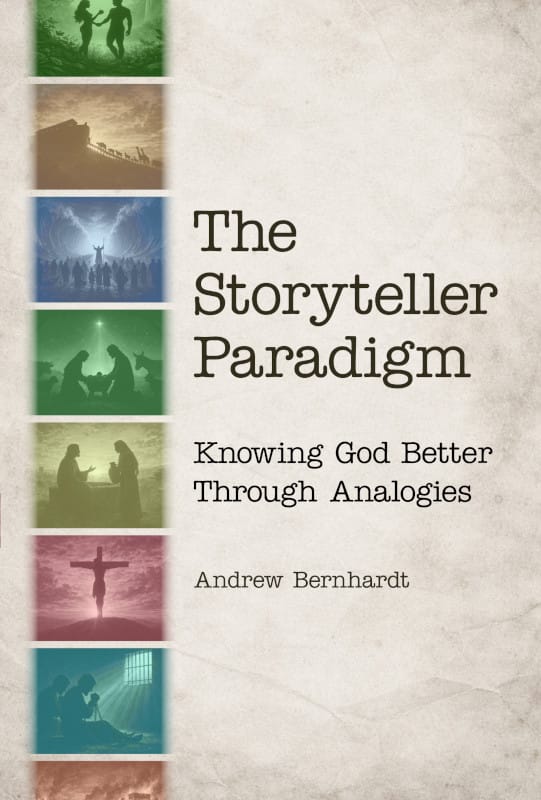
My new book, The Storyteller Paradigm, is basically complete. I am waiting for the remaining proofreaders’ inputs. I expect the book to be published late May or early June. Here’s a little sampler from the book:
Suffering In The Story
Throughout history, mankind has experienced a tremendous amount of suffering and death. This has turned many against God, but it has also brought others closer to Him. Regardless, it oftentimes results in the burning question, “Why?”
In stories we write, the main characters are not immune to pain and death. While these may form a significant and essential part of a good story, the story is not about the suffering. We sometimes ask God why we have to suffer or why a loved one had to die. What if a story character could ask his author the same thing?
(Spoiler alert!) In the 2006 movie Stranger Than Fiction, Harold Crick (played by Will Ferrell) began hearing a voice in his head narrating his everyday life. The voice didn’t speak directly to him; it spoke of him in the third person, as if to a reader of a novel. That was strange enough. But Harold became very unsettled after his watch stopped, and he had to reset it to the time a stranger gave him. Immediately, the voice said this would result in his imminent death. What was before putting up with an annoying voice now became an urgent quest to find the source of that voice.
In time, Harold discovered the voice’s owner: Karen Eiffel (Emma Thompson), a reclusive writer of fiction who was known for always killing off her main characters. Harold didn’t want to die, so his search for his author became more urgent.
Eventually, Harold found Karen and told her he was the main character in her story. Karen was shocked to find that Harold was a real human being. But, although she sympathized with Harold, the story had to be finished. On the advice of her assistant, Penny Escher (Queen Latifah), Emma loaned Harold the draft of the story to read. After he read it, he agreed: his death was the best possible ending to the story, and he willingly submitted to his fate.
What if God did the same with us? What if He let us see His manuscript in advance? For the apostle John, God did just that. In the book of Revelation, John saw the last part of God’s story and how it ended. He saw things get incredibly bad on earth. He saw suffering increase. But he also saw the end result for the believers: it was better than he could imagine, and worth the trouble. If we could see God’s manuscript, I believe we would agree that the bad things we suffer are for the good.
We know that all things work together for good for those who love God, to those who are called according to his purpose.
Romans 8:28)
When things don’t go the way you think they should, God has not let some of His control slip. George Lucas did not lose control when Obi-Wan Kenobi and Yoda died. J. R. R. Tolkien didn’t lose control when Boromir and Theoden died. And C. S. Lewis didn’t lose control when Aslan died. These characters died for a purpose. Their authors didn’t hate them. Their deaths were necessary to the story.
People suffer today because it is necessary for God’s story. Job suffered tremendous loss, and he never received a satisfying answer from God as to why, but he continued to trust in Him. By the end of the book, Job, like Harold Crick, was content with his Author’s response, even though his earlier questions had not been answered.
There’s nothing wrong with doing what Harold Crick did: going to our Author and asking Him why, or asking Him to change our part of the story. Jesus did so in the Garden of Gethsemane. We may not receive the answer we want, but we need to trust that our good and faithful God knows what He’s doing. The reasons for our suffering are not usually evident because we’re still in the story, but eventually we will know. In the meantime, we must continue to trust that the Author knows best.